


Welcome to the first edition of the Social Capital Campaign’s new biweekly publication sharing ideas, research and conversations with people rebuilding social capital across America.
This week, we consider how relationships can prevent and alleviate homelessness, make the case for social-capital-minded child-care policy, and share five things worth your attention.
Opinion
Child-care policy should strengthen kindship relationships
Child care is back on the menu, and Matthew Continetti outlines the fault lines on the Right over small or big government approaches in WSJ Free Expression. The latest argument over federal child-care policy asks whether government should support parents who stay home as well as those who purchase professional care. But there is a larger question. Families consistently rely on—and often prefer—parents themselves, then grandparents, relatives, friends and trusted members of their communities to care for children. Yet access to those relationships is profoundly unequal. Some families are rich in the stable relationships that make care possible; others have very few, the subject of our previous report on America’s social-capital divide.
Public policy should not respond to that divide simply by making professional care by strangers the default for families with the fewest resources. The longer-term goal should be to affirm and strengthen the family and kinship structures around children, while supporting families’ immediate choices. If government subsidizes care, it should support a parent who stays home, strengthen kinship care, and allow families to draw on people they already know and trust. Child-care policy should strengthen the relationships surrounding a child, not further work to undermine them.
Read Matthew Continetti on the emerging child-care debate
The Practitioner
Simon Dwight on Social Capital and Homelessness
In this regular feature, we interview a leader working to build social capital in their community, to help identify what works, and inspire with practical solutions.
In the first edition, Homeward Bound of WNC CEO Simon Dwight explains how housing costs and relationship breakdown contribute to homelessness—and how prevention and social networks can provide a way out.
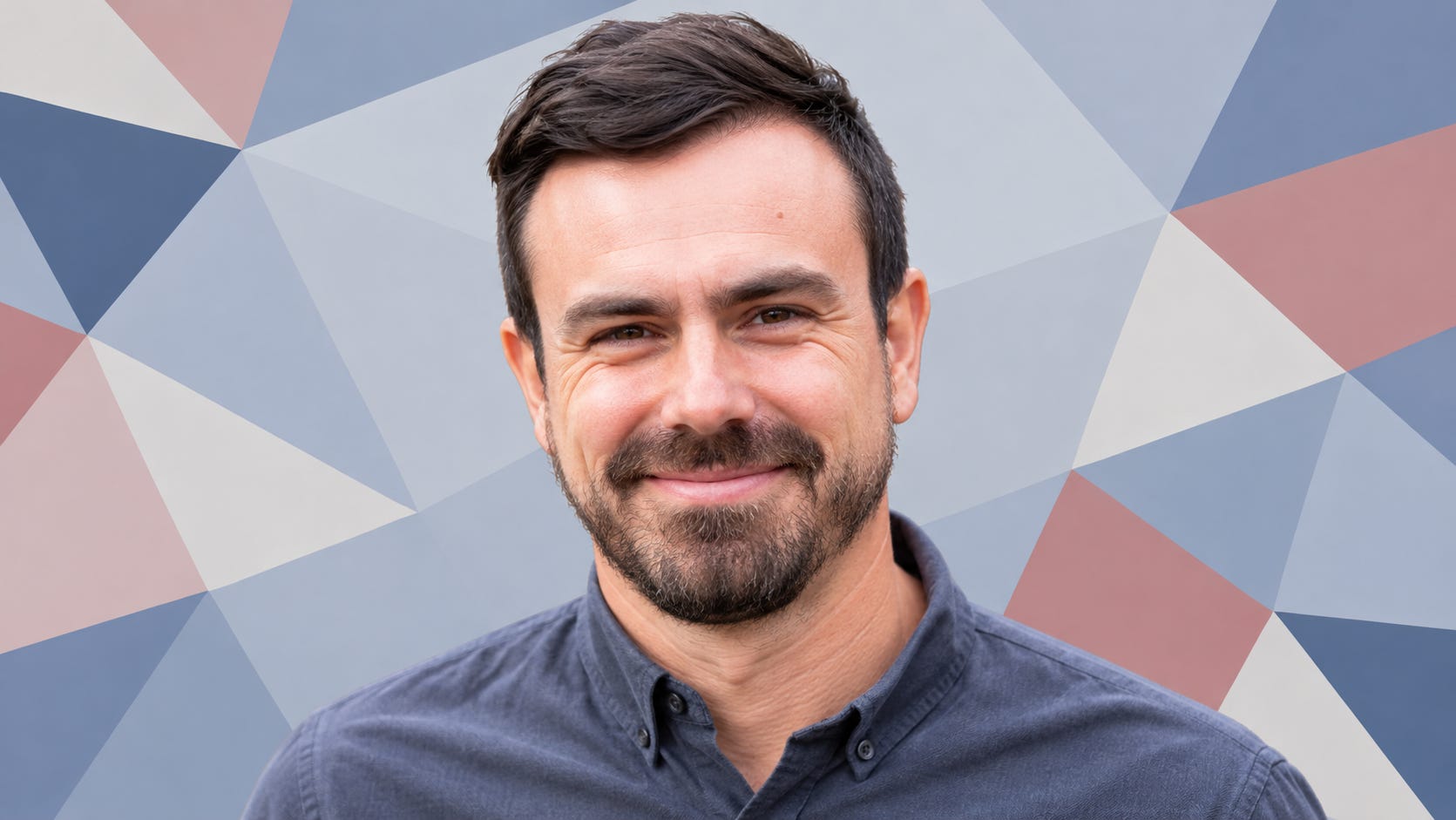
Simon Dwight is CEO of Homeward Bound of WNC, in Asheville, NC, a nonprofit working to end homelessness in its local community. Simon has a doctorate from Middlesex University, and a masters from the University of Cambridge, UK.
What are the main drivers of homelessness?
At a macro level, rental affordability and the availability of affordable housing generally. Once typical rents in a city climb above about 30% of median income, homelessness starts rising quickly. Across the US, we’re also short around 7.2 million rental homes that are affordable and available to the lowest-income renters.
At a micro level, I’d call it relationship breakdown. Broadly, a good protector against homelessness is a wide social network — i.e. you have someone you can move in with if your spouse kicks you out while you figure things out. It also helps if this network is wide and well-resourced. For example, if all your friends live in studio apartments, sharing with them is likely to be more time-limited than if your friend has a house with a spare room.
The micro and the macro are all connected, with affordability and financial challenges putting additional pressure on relationships, etc.
Some cities have responded to street homelessness by tolerating camping and behaviors such as public drug use. Does that approach work—or is there a more effective form of compassion?
You need both compassion and action. A friend of mine in the faith sector calls it, “Grace and Truth.” Indefinite compassion won’t bring about change — a balance of compassion with a more solid assertion that change is required is more effective.
The problem in many cities is that an alternative isn’t available when enforcement is used. Without a shelter or housing option, banning camping just moves people to a different part of the city or forces them to hide, making support for them more difficult.
As a society, we should never be comfortable with this situation. It’s not acceptable to have people living homeless, and I don’t think we should allow illegal activity, including public drug use. I don’t think that helps anyone.
Economists sometimes describe relationships across class lines as “cross-class exposure,” providing routes out of poverty. Does that describe what you see, or is something more relational taking place?
One of the key findings of my research, and something I’ve become very interested in, is the role of relationships in ending homelessness. My early research found that the people who were able to escape homelessness were those who had been able to build a relationship outside of the homeless community. Those whose friendships were only within the homeless community tended to struggle more to escape.
The relationships outside of the homeless community were generally built through a faith group, employment, or a social interest group. Based on that, I think it’s important to help people experiencing homelessness develop the confidence and knowledge to access those spaces where these relationships can be formed.
You’ve worked on homelessness in both the UK and US and advised governments and the UN. If you could recommend just one policy or approach, what would it be?
Start at zero: prevention. The further upstream we can intervene in homelessness, the better — and the cheaper. That means identifying early indicators of housing instability before someone actually loses their housing and intervening at that point, ideally before an eviction notice is even issued.
I’ve seen very effective interventions in this space where something relatively small, such as helping with a car repair, can prevent a situation from spiraling. A broken-down car can lead to missed work, then job loss, then an inability to pay rent, and eventually homelessness. If you intervene early, the problem can often be resolved quickly and at relatively low cost.
I’d also point to the No Second Night Out policy in the UK. The principle is to get people inside as quickly as possible. Sleeping on the streets is incredibly traumatic, and the longer someone remains there, the more complex their situation can become. Getting people inside quickly can therefore prevent homelessness from becoming chronic and, again, is both more effective and less expensive.
Some people describe effective homelessness work as a form of “reparenting”: providing relationships, role models and boundaries that may previously have been missing. Does that ring true to your experience?
It does — at times — feel like that. Similar to the question about camping, I think we need many sides of the parenting spectrum: compassion, encouragement, and boundaries.
I think less through this lens than I used to when I was on the front line. What I do believe is that we, as “the system,” need to provide fair and meaningful opportunities for people to escape homelessness, and that most people, given those opportunities, will be able to do much of the rest for themselves.
Homeward Bound of WNC works to prevent and end homelessness in Asheville and Buncombe County, NC through permanent housing and support. Since 2006, they've ended homelessness for over 2,760 people.
Five things worth your attention
Can neighborhoods grow from the inside out?
SCC Advisory Board member Seth Kaplan highlights Bonton Farms in Dallas as “rooted growth”: start with relationships and shared activity, then build jobs, leadership and opportunity around them. A useful model for place-based social capital.
Read Seth Kaplan on Bonton Farms
Thirty years after welfare reform
Scott Winship and Kevin Corinth revisit the 1996 welfare reforms and the continuing argument over their effects. A useful entry point into the larger SCC question of how safety-net policy affects work, mobility and family life.
Read “The Ongoing Battle to Defend Welfare Reform”
What happens to men when they become fathers?
SCC Advisory Board member Brad Wilcox interviews neuroscientist Darby Saxbe about evidence that fatherhood changes men’s brains and behavior. An interesting contribution to thinking about fatherhood as a relationship that changes men, not simply a responsibility they acquire.
Read the Darby Saxbe interview
Rethinking kinship care
AEI’s Sarah Font argues that evidence does not consistently show kinship placements outperforming other foster-care arrangements. A useful challenge to received wisdom—and a reminder that strengthening kinship requires understanding when and why it works.
Read “Let’s Prioritize Children’s Best Interests in Our Kinship Care Policies”
Friendship has acquired a class problem
Christine Emba examines paid social clubs and increasingly status-conscious approaches to making friends. An intriguing example of what happens when institutions that once generated relationships organically disappear—and the market begins selling substitutes.
Read “Status Defines Friendship for Too Many Americans”