


Welcome to the Social Capital Campaign’s biweekly publication sharing ideas, research and conversations with people rebuilding social capital across America.
Great News
We’re delighted to announce that the Social Capital Campaign now has a fiscal sponsor, More in Common US. This means SCC can now accept tax-deductible charitable contributions from individuals, foundations and corporations as we build the next phase of our work.
Help us identify, share, and support the work of people rebuilding social capital across America. If you’d like to contribute, please reply to this email—we’d love to hear from you.
Opinion
Feeding Our Future stole more than money. It stole trust.
The $250 million Minnesota fraud scandal exposed the vulnerability of public programs that rely on local organizations to deliver services. But the answer is not to retreat from partnerships with nonprofits, churches and community groups. These institutions often possess precisely the local knowledge and relationships government lacks. The challenge is to combine that social capital with serious oversight.
Read in full at The Washington Examiner
Marriage Deserts
SCC research puts America’s family divide in the national spotlight
Our new report, Marriage Deserts: Mapping America’s Family Divide, has attracted national coverage, including Fox News, the New York Post, Deseret News, and Newsmax.
Authored by SCC Senior Fellow Chris Bullivant with Ken Burchfiel, and published by the Institute for Family Studies, the report uses 2020 U.S. Census data to map marriage and married-parent households across America.
The question behind it was simple: if growing up around married parents is associated with greater opportunities for children, where are those neighborhoods—and where are they disappearing?
The maps reveal striking contrasts: communities where marriage remains the norm sit alongside others where comparatively few households include a married couple. They also identify where children are most—and least—likely to live with married parents.
For SCC, this raises a practical question: where should we invest in rebuilding social capital? These maps give foundations, philanthropists, community leaders, and policymakers a starting point for identifying places where support for relationships and family life may be most needed. Our practitioner interview below explores what that support can look like.
Explore the maps and report, or see the coverage:
Fox News TV | Fox News | New York Post | Fox & Friends | Deseret News | Newsmax
The Practitioner
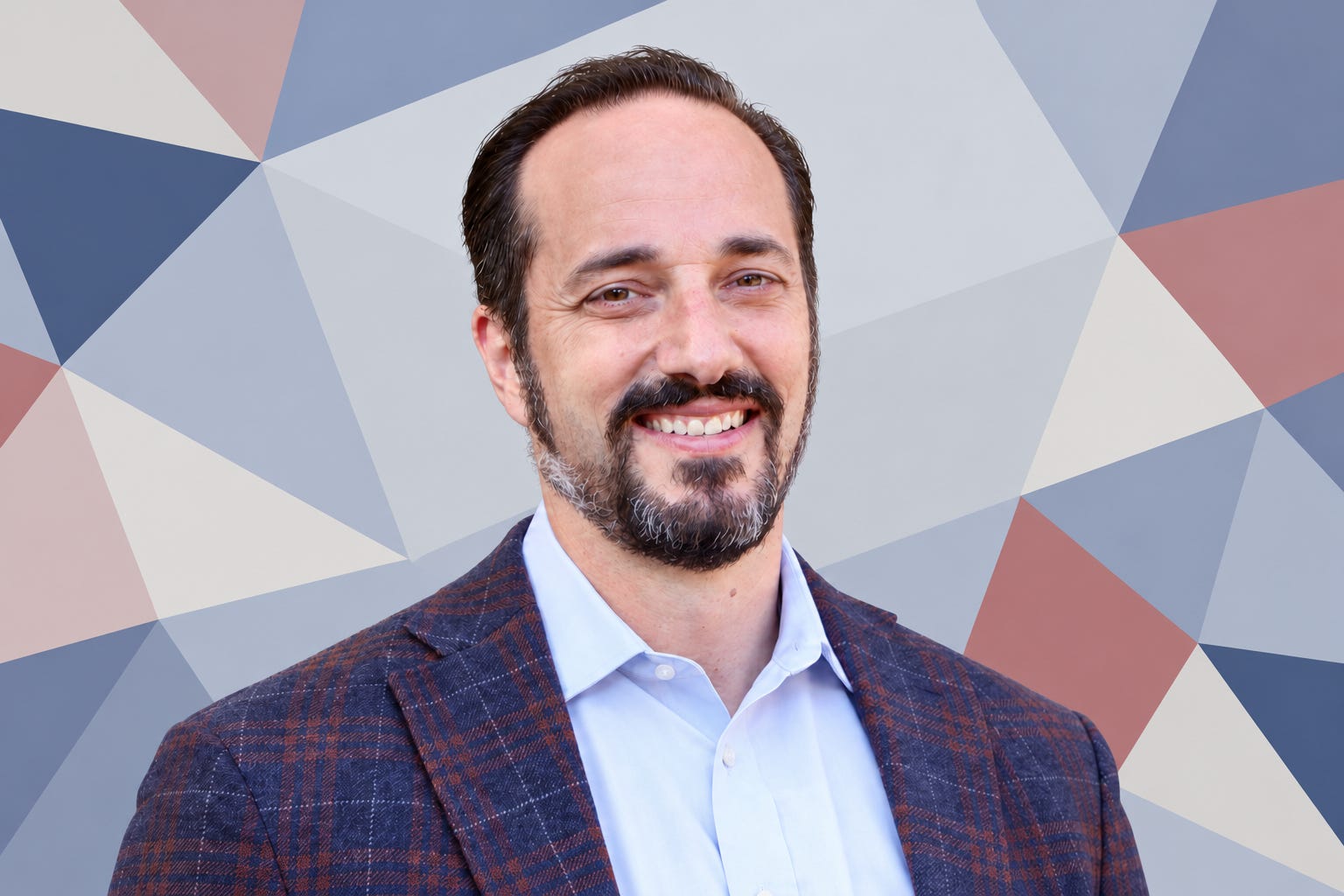
J.P. De Gance
In this regular feature, we interview a leader working to build social capital in their community, to help identify what works, and inspire with practical solutions.
Marriage Deserts are a proxy for low social capital and perhaps indicate a breakdown of relational security in neighborhoods. SCC interviews a practitioner who has helped churches in local communities support individuals figuring out marriage and family in diverse neighborhoods.
J.P. De Gance is the founder and president of Communio and the co-author of the book, Endgame: The Church’s Strategic Move to Save Faith and Family in America. Communio is a nonprofit ministry that trains and equips churches to share the Gospel through the renewal of healthy relationships, marriages, and the family.
Someone can want to get married without feeling that a good marriage is within reach. What have you learned about that gap—and how can a church help someone bridge it, particularly if they haven’t grown up around strong marriages?
The biggest learning for me in recent years is that shifting parental and cultural expectations are perhaps the largest set of factors creating our marriage gap.
One is the idea that you must have a career launched and be financially secure before considering marriage. Pew shows 9 in 10 parents say it’s important their kids have a fulfilling career and are financially independent when they grow up, but just 1 in 5 say it’s important their kids marry. Along with these increased material expectations is a basket of expectations that can be described as making the perfect the enemy of the good. These lists of wants and desires are not always particularly relevant to actually having a good and healthy marriage.
All of this causes fewer women and men to be intentional with relationships in their early 20s, when they have both the time and easier access to the social outlets to find a potential spouse.
At least some of these unhelpful expectations are common among churchgoing parents and young people. Too few parents talk in practical ways with their teens about marriage and relationships. Churches can help tremendously by advancing healthy expectations.
Churches should bridge the marriage gap in three ways:
Create social avenues, and not just faith formation pathways, for young people to form friendships. In our disconnected, digital world, the local church should be a place of in-real-life connection. Cookouts, bonfires, sports, dances, hikes, and museum tours are all potential ways to bring young people together.
Teach practical skills for Christian dating and relationship discernment.
Help form healthy expectations about relationships and marriage. There is much more needed than just the Sunday sermon, but it is an underappreciated tool. We need churches to cast a powerful vision for the beauty of Christian marriage.
What does that help look like in someone’s everyday life? Could you tell us about a person or couple whose experience captures what Communio and a local church can make possible?
Several years ago, a 22-year-old, churchgoing young man was trying to launch his career and sought professional advice from me. We spoke for about half an hour on jobs he should apply to and tracks he might pursue. Knowing that he had been dating someone for more than a year, I asked him how that was going. He said everything was great with her.
I asked him a number of questions such as: Do you love her? How does she get along with her own parents and family? How do you get along with her parents? How does she interact with your family? Do you share a faith and worldview?
After positive responses to these and similar questions, I asked: “So, I got to ask you, why aren’t you engaged?”
His immediate answer was something along the lines of: “We’re too young to get married.”
I shared that my wife and I have a great marriage. Yet either of us could have married another person seeking the Lord and been happy. Thank God that didn’t happen. Waiting for the perfect marriage is a fool’s errand, because there is no such thing as a perfect marriage any more than there are perfect people. Based on his answers, it sounded like he’d have a good marriage.
We got off the phone, and I didn’t think much about it until his dad called about six weeks later.
“My son is shopping for engagement rings,” he told me. “He said he spoke to Mr. De Gance and that conversation really made him rethink things.”
He has now been married for three years, and they just welcomed their second child.
Inside Communio’s church partners, this work takes many forms. One evangelical church partner in Bozeman has built a vibrant young adult community where outdoor social activity is a powerful hook. Regular hikes and outdoor adventures are augmented by informal hangouts with the lead pastor and his wife over coffee, where conversations about relationships and marriage can occur. This church of just over 200 people has prepared more than 42 couples for marriage over the last two years.
Another evangelical partner in a working-class community encouraged long-term dating couples to pursue marriage. If they went through the church’s marriage preparation program, it would provide a free wedding, wedding reception, and a honeymoon weekend at a local hotel. Five couples took them up on the offer.
How does the work change between an affluent suburb and a neighborhood where money is tight and family life is less stable? What carries across those settings, and what have you had to rethink to make the support useful and accessible?
We’ve supported churches in areas of grinding poverty and racially diverse communities such as Belle Glade, Florida, and in great affluence like the Cherry Hills neighborhood of Denver.
People are universally made for connection. What works in all communities is fostering environments where people enjoy life together. A unique challenge in high-poverty communities is that hourly employment often consumes a Saturday evening or Sunday morning, so churches have to be creative about building community at unconventional times.
People want to first find a place where they belong before they are ready to believe. When belonging happens, they experience a loving Christian community. This creates openness to belief. And, through believing, people often become something more.
Adapting community activities and skills instruction to the culture of each community is vital. What attracts individuals and couples in a majority Mexican-American community, for example, will look different than in an affluent suburb. We have learned that it is not enough simply to translate an English-speaking program into Spanish. My friend Dr. Alicia LaHoz and her ministry, Lazos de Familia, have done a fabulous job of adapting, not just translating, resources for Hispanic communities.
What can a church community offer that a relationship course on its own cannot? For someone arriving without much confidence in relationships—or much connection to church—what helps them feel they belong and gives them people they can turn to?
Relationship courses can run in many different settings. But a church community provides a place of belonging where faithful people seek to form enduring friendships outside the context of any program.
For example, we might meet you at a Relate Well program at my church. During a break, my wife gets to know your wife and invites her over to our home for coffee and a playdate with her small kids.
Churches are by no means perfect at fostering Christian community, but the desire for it and effort to build it is real and transformative when it exists.
We work with churches to build and improve their culture of Christian hospitality. We all have a desire to be known. A first step is learning someone’s story: being intentional about identifying first-time guests and having conversations where they are invited to share their own story and background. These are important steps to developing trust.
Your Jacksonville initiative reported a substantial decline in divorce. What did you learn there about helping relationships last—and what are you learning about helping people form good marriages in the first place? Where have you seen that work take root in communities where marriage has become less common?
When starting our pilot in Jacksonville, we did not restrict our work to partnering with churches. We collaborated with faith-based and secular NGOs. There were even relationship skills courses brought to parents via the public schools.
What we found was that the local church was the most effective venue to run these programs, because there was a community life that lived outside the context of any program.
Learning skills such as appreciation, communication, and resolving conflict usually goes a long way toward improving a marriage. But there is a stigma associated with seeking help. There are often feelings of shame. It is critical to build a culture where everyone—especially those with good marriages—invests in their relationship. When churches do this, they take marriage ministry out of the shadows and bring it to the full church.
We are also seeing more marriages happen. One Catholic partner in Florida has built an ongoing, year-round ministry that supports healthy and holy Christian marriages. The pastor shared with me that their number of weddings has more than quadrupled over the last four years, particularly within the lower-income immigrant community.
Couples who had been cohabiting for a long time have approached him and shared that his emphasis on marriage caused them to seek premarital preparation through his parish and get married.
This same church has built a vibrant young adult community. They’ve hosted discussions offering practical advice on how to determine whether a dating interest is marriageable, taking a group of 30 young adults through a six-week small-group course called the RAM Series.
Communio is a nonprofit that trains and equips churches to evangelize through the renewal of healthy relationships, marriages, and the family.
Five things worth your attention
Americans Feel More Able to Shape Their Community Than the Future of the Country
New Gallup research finds that Americans strongly connected to their communities are nearly three times as likely to believe they can make a difference locally rather than nationally (47% versus 17%). Among barriers to participation, 26% say nobody has asked them.
Peter Lynch’s philanthropy began with social capital
The Philanthropy Roundtable profiles investor Peter Lynch, whose family foundation has donated more than $330 million. Lynch credits the Catholic Church, Boy Scouts, YMCA and a scholarship for opening opportunities during his childhood. His approach to giving emphasizes identifying exceptional leaders, supporting them and allowing them room to work.
America’s debt crisis is a family policy problem
Elliot Haspel and Joe Waters argue that America’s growing national debt threatens more than government finances. Rising interest payments and entitlement spending will increasingly crowd out support for children and families, while higher borrowing costs put pressure on household budgets. An important reminder that fiscal sustainability and family well-being cannot be considered separately.
When business executives become prison mentors
Texas-based Prison Entrepreneurship Program brings volunteer business executives into prisons to mentor incarcerated men, develop entrepreneurial skills and open professional networks. The relationships continue after release, alongside employment and family-reconnection support. PEP reports that more than 740 businesses have been launched by alumni.
Explore the Prison Entrepreneurship Program
Young people with stronger social connections are less likely to be disconnected
RAND researchers Jennie Wenger and Stephanie Bonds find that approximately 16% of Americans aged 18–24 in a typical community are neither working nor enrolled in education or training. Crucially, communities with stronger relationships across socioeconomic groups have substantially lower rates of youth disconnection. The researchers identify mentoring and adult community relationships as potentially useful interventions.